Digital Marketing Agency for Ecommerce Brands
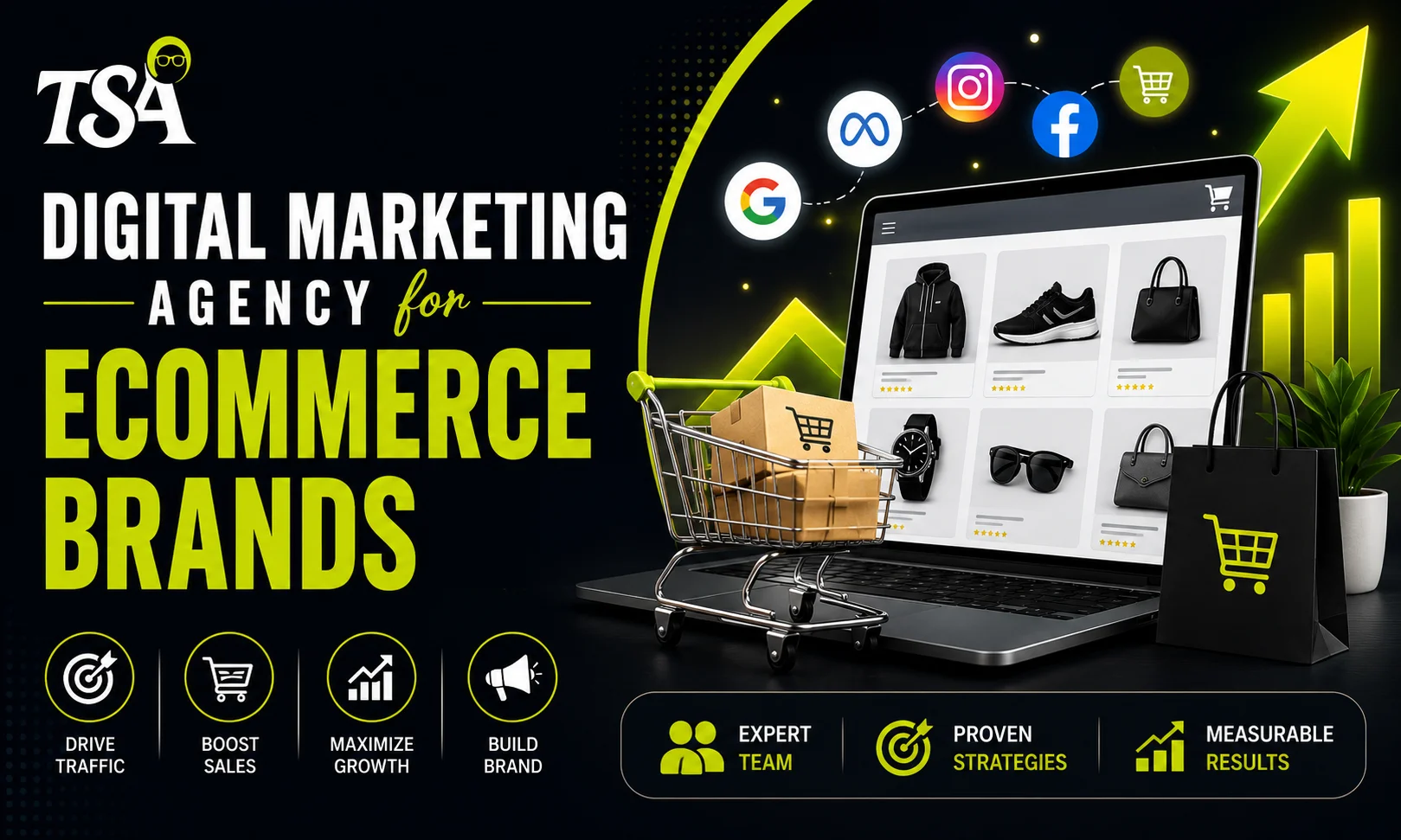
The Socially Active is a digital marketing agency for ecommerce brands helping online businesses increase product visibility, attract relevant shoppers, improve website conversions, and generate measurable sales through SEO, paid advertising, social media, content, creative production, and website optimization.
We build ecommerce marketing strategies around your products, customers, competition, margins, and growth objectives. Every channel has a specific role, from helping shoppers discover your products to helping them compare, purchase, and return for future orders.
Get Your Free Ecommerce Growth Audit
What Does an Ecommerce Digital Marketing Agency Do?
An ecommerce digital marketing agency helps online stores attract potential customers, increase product visibility, generate qualified website traffic, convert visitors into buyers, and encourage repeat purchases through multiple digital marketing channels.
At The Socially Active, we combine ecommerce SEO, Google Ads, Google Shopping, Meta Ads, social media marketing, content marketing, website optimization, creative production, influencer marketing, and retention strategies according to the needs of your ecommerce business.
Our focus is not simply generating traffic or engagement. We connect marketing activity with important ecommerce outcomes such as product discovery, website conversions, customer acquisition, sales, and repeat purchases.
From Product Discovery to Repeat Purchase
Ecommerce customers can discover a product through Google, social media, advertisements, creators, recommendations, or content before eventually visiting your store. Your marketing should support every important stage between discovery and purchase.
Discover
We help ecommerce brands reach potential customers through organic search, Google Shopping, paid search, Meta advertising, social media, content, creator collaborations, and other relevant acquisition channels.
Consider
Once shoppers reach your website, product information, reviews, images, videos, comparisons, FAQs, pricing, delivery details, and other useful information can help them evaluate whether the product meets their needs.
Purchase
We optimize important parts of the ecommerce experience, including product pages, navigation, cart journeys, checkout experiences, calls to action, trust signals, and mobile usability to reduce unnecessary barriers before purchase.
Repeat
After a purchase, email, WhatsApp, remarketing, product recommendations, loyalty campaigns, useful content, and personalized offers can help businesses maintain customer relationships and encourage appropriate repeat purchases.
Ecommerce Digital Marketing Services
Our ecommerce marketing services cover the primary channels and customer touchpoints that influence product discovery, customer acquisition, website conversion, and repeat sales.
Ecommerce SEO
Ecommerce SEO helps your products and categories become more visible when potential customers search for products, brands, categories, solutions, comparisons, and related information on search engines.
Our ecommerce SEO approach can include keyword research, search intent analysis, technical SEO, product-page optimization, category-page optimization, internal linking, content development, image optimization, structured data, competitor research, authority development, and performance analysis.
Product pages target specific products and transactional searches, while category and collection pages target broader product searches where shoppers are comparing multiple products. We optimize both according to their different search purposes.
Informational content can then support these commercial pages by answering product-related questions, explaining use cases, comparing alternatives, addressing customer concerns, and creating additional opportunities for shoppers to discover your brand.
Google Ads and Shopping for Ecommerce
Google Ads can help ecommerce brands reach shoppers who are already searching for relevant products or solutions. We create campaigns around product categories, search intent, geographic markets, budgets, landing pages, product feeds, and measurable conversion goals.
Our ecommerce advertising services can include Google Search Ads, Google Shopping, Performance Max, brand campaigns, non-brand campaigns, remarketing, product-feed optimization, conversion tracking, and ongoing campaign optimization.
The objective is to connect advertising with the complete purchase journey: search, advertisement, product page, cart, checkout, and purchase. This allows campaign decisions to consider business outcomes rather than focusing only on clicks or impressions.
Meta Ads for Ecommerce Brands
Meta Ads can help ecommerce businesses introduce products to new audiences, create demand, retarget interested shoppers, promote offers, and bring previous website visitors back to the store.
We can develop campaigns across Facebook and Instagram using product-focused creatives, catalogue advertising, prospecting, retargeting, customer audiences, creator content, promotional campaigns, and creative testing based on your business objectives.
Successful ecommerce advertising often requires testing different product presentations, hooks, benefits, offers, formats, audiences, and landing-page experiences. We use campaign performance to identify stronger combinations and improve advertising efficiency over time.
Ecommerce Conversion Optimization
Increasing website traffic does not automatically increase ecommerce revenue if visitors cannot quickly understand the product, trust the store, navigate the website, or complete checkout.
We review the customer journey across product discovery, product evaluation, cart, checkout, and purchase to identify unnecessary friction that may prevent interested shoppers from completing their orders.
Product Page Optimization
Product pages should clearly communicate what the product is, who it is for, why it matters, what it costs, and what customers should do next.
We can optimize product imagery, descriptions, benefits, specifications, reviews, FAQs, pricing information, offers, delivery details, return information, calls to action, and other elements that influence purchase decisions.
Category Page Optimization
Category pages should make it easy for shoppers to understand the category, discover relevant products, filter options, compare products, and move efficiently toward individual product pages.
Cart Optimization
A clear cart experience should communicate selected products, pricing, delivery information, available offers, and relevant next steps without creating unnecessary distractions before checkout.
Checkout Optimization
Checkout optimization focuses on reducing avoidable friction around forms, payment methods, mobile usability, errors, trust information, delivery expectations, and other factors that can interrupt the purchasing process.
Ecommerce Website Development
Your ecommerce website should support product discovery, search visibility, customer trust, conversion, analytics, and future marketing activity rather than functioning only as an online product catalogue.
We can develop or improve ecommerce websites with attention to mobile usability, navigation, product architecture, website speed, search functionality, product presentation, checkout experience, SEO foundations, analytics, and conversion tracking.
Ecommerce Platforms
Where relevant to the project and our actual technical capabilities, ecommerce development can support platforms such as Shopify and WooCommerce, along with other platforms appropriate to the business requirements.
Ecommerce Website Priorities
A growth-focused ecommerce website should provide simple navigation, clear product information, fast loading experiences, mobile-friendly design, secure checkout, useful search functionality, structured product information, and appropriate measurement systems.
Explore Our Website Design & Development Services
Social Media Marketing for Ecommerce Brands
Social media helps ecommerce brands build awareness, communicate product benefits, educate customers, showcase products, create communities, and maintain relationships with existing and potential customers.
Our social media strategy can include product demonstrations, tutorials, customer stories, testimonials, educational content, product comparisons, behind-the-scenes content, brand storytelling, reels, creator content, product launches, and promotional campaigns.
We develop content around your products and customer interests instead of publishing generic posts that generate engagement without contributing to brand awareness, product consideration, or customer relationships.
Explore Our Social Media Marketing Services
Content Marketing for Ecommerce
Ecommerce content marketing helps potential customers discover your products while answering the questions they ask before making a purchase decision.
We develop content around product education, buying guides, comparisons, use cases, customer problems, product alternatives, seasonal demand, frequently asked questions, and other subjects that connect naturally with your products.
Product Education
Educational content can explain how products work, how they should be used, who they may be suitable for, and what customers should consider before purchasing.
Buying Guides
Buying guides help shoppers understand different options, compare important features, identify suitable products, and move toward an informed purchase decision.
Product Comparisons
Comparison content can address searches where customers are evaluating competing products, product types, features, materials, specifications, prices, or use cases before making a decision.
Product Photography, Videography and Creative Content
Ecommerce customers cannot physically examine products through a screen, making strong visual communication important for product discovery and purchase consideration.
The Socially Active can support ecommerce brands with product photography, lifestyle photography, product videos, social media creatives, reels, advertising creatives, campaign shoots, and other visual assets required across digital channels.
Ecommerce Creative Services
Product Photography: Present products clearly through professional images designed for ecommerce websites, marketplaces, advertising, and social platforms.
Lifestyle Photography: Show products in relevant environments that help potential customers understand how they can fit into everyday situations.
Product Videos: Demonstrate product features, usage, benefits, applications, and important information through short-form or longer video content.
Social Creatives: Develop platform-specific visuals that communicate products effectively across organic social media and paid campaigns.
Advertising Creatives: Create multiple creative concepts for testing different product benefits, offers, audiences, and campaign messages.
Explore Our Photography & Videography Services
Influencer and Creator Marketing for Ecommerce
Creators can help ecommerce brands introduce products through demonstrations, reviews, tutorials, lifestyle content, recommendations, and user-generated content that potential customers can relate to more naturally.
Our creator marketing approach focuses on finding appropriate creators based on audience relevance, content quality, product fit, campaign objectives, and the type of content required rather than selecting creators solely according to follower count.
Creator content can also provide reusable assets for social media, paid advertising, product pages, campaigns, and other customer touchpoints when appropriate usage rights are secured.
Explore Influencer Marketing Services
Retention and Repeat Purchases
Ecommerce growth should not depend entirely on acquiring new customers because existing customers can represent valuable opportunities for repeat purchases when the product naturally supports continued purchasing.
We can support retention strategies involving email marketing, WhatsApp communication, abandoned-cart communication, post-purchase engagement, product recommendations, cross-selling, upselling, re-engagement campaigns, loyalty initiatives, and relevant promotional communication.
Abandoned Cart Recovery
Customers sometimes leave products in their carts without completing checkout. Appropriate follow-up communication can remind interested shoppers about their pending purchase while addressing relevant concerns or providing useful information.
Post-Purchase Marketing
Post-purchase communication can help customers understand product usage, discover relevant products, receive support information, and remain connected with the brand after completing their original purchase.
Repeat Purchase Marketing
For products with natural repurchase cycles, marketing can remind existing customers when another purchase may be relevant while using customer and product data responsibly.
Ecommerce Marketing for Different Business Models
Different ecommerce businesses have different customer journeys, product economics, competitive conditions, and acquisition challenges. Our strategy is adapted to the business model rather than applying identical campaigns to every store.
D2C Brands
D2C brands can combine brand positioning, ecommerce SEO, paid acquisition, social media, creative content, conversion optimization, and retention to build direct relationships with customers.
Established Ecommerce Stores
Established stores can focus on improving organic visibility, paid acquisition efficiency, conversion rates, customer retention, product discovery, and the performance of existing marketing channels.
New Ecommerce Stores
New stores may require a stronger foundation across positioning, website experience, product pages, analytics, tracking, SEO, creative assets, social presence, and initial customer acquisition.
Ecommerce Brands Selling Through Multiple Channels
Brands selling through their own website and marketplaces can develop strategies that strengthen direct website growth while maintaining consistent product communication across different customer touchpoints.
Ecommerce Marketing for Different Industries
Our marketing strategy can be adapted to the products, audiences, purchase journeys, and competitive conditions of different ecommerce categories.
Fashion and Apparel
Marketing can focus on product discovery, visual content, collections, seasonal campaigns, social commerce, creators, and repeat purchasing.
Beauty and Skincare
Content can combine product education, demonstrations, routines, customer questions, creator content, social media, search visibility, and product-focused advertising.
Home and Lifestyle
Marketing can use product education, lifestyle photography, buying guides, search optimization, social content, and campaigns focused on practical product benefits.
Electronics and Consumer Products
Marketing can emphasize product specifications, comparisons, demonstrations, buying guides, reviews, search intent, paid acquisition, and conversion-focused product pages.
Our Ecommerce Marketing Process
01. Ecommerce Store Audit
We review your website, product pages, category structure, SEO, analytics, advertising activity, social presence, conversion journey, and customer touchpoints to identify the most important opportunities.
02. Competitor Research
We examine competing brands, product visibility, search presence, advertising approaches, content, offers, creative positioning, and customer experiences to identify areas where your ecommerce brand can differentiate.
03. Customer and Product Research
We understand your products, target customers, purchase motivations, objections, pricing, competitive advantages, product margins where relevant, and customer journey before recommending marketing priorities.
04. Channel Strategy
We determine which combination of ecommerce SEO, Google Ads, Shopping, Meta Ads, social media, content, creators, website optimization, and retention activities best matches your business objectives.
05. Creative Strategy
We develop product messaging, visual concepts, advertising creatives, content formats, offers, and communication themes that can be tested across relevant digital channels.
06. Launch and Testing
Campaigns, content, SEO initiatives, creative assets, and website improvements are implemented according to the agreed strategy, with testing used to identify stronger approaches.
07. Measurement
We monitor relevant performance indicators such as traffic, conversion rate, customer acquisition cost, advertising performance, organic visibility, revenue, average order value, and repeat purchase activity where reliable tracking is available.
08. Optimization and Scaling
We use performance data to improve campaigns, creatives, landing experiences, product pages, content, and acquisition strategies while increasing investment in approaches that demonstrate stronger business value.
Why Ecommerce Brands Choose The Socially Active
Strategy and Execution Together
We connect marketing strategy with the creative, content, website, advertising, social media, and production capabilities required to execute that strategy across the customer journey.
Creative-Led Ecommerce Marketing
Our capabilities across photography, videography, social media, branding, content, and creator marketing help ecommerce brands communicate products consistently across websites, social platforms, advertising campaigns, and other digital touchpoints.
Full Customer Journey
We consider how customers discover products, evaluate options, decide whether to purchase, complete checkout, and potentially return for future purchases when developing an ecommerce marketing strategy.
Data-Informed Decisions
We use available performance data to identify opportunities, evaluate campaign effectiveness, understand conversion behavior, and make marketing decisions based on measurable objectives.
Connected Marketing Capabilities
SEO, paid advertising, social media, content, creative production, websites, branding, and creator campaigns can work together under one strategy instead of operating as disconnected activities.
How Much Does Ecommerce Digital Marketing Cost?
Ecommerce digital marketing costs vary according to the size of your store, number of products, target market, competition, advertising budget, SEO requirements, creative production needs, website scope, social media requirements, and growth objectives.
A new ecommerce business may require stronger investment in branding, website development, product photography, tracking, SEO foundations, social media, and initial customer acquisition, while an established store may prioritize scaling profitable channels, conversion optimization, retention, and organic growth.
We recommend assessing your ecommerce business before determining the appropriate marketing investment because the right strategy depends on your products, customers, competition, existing digital presence, and commercial objectives.
Get Your Custom Ecommerce Marketing Plan
Ready to Grow Your Ecommerce Brand?
The right ecommerce marketing strategy connects product discovery, customer acquisition, website conversion, creative communication, and repeat purchasing instead of treating each marketing channel as a separate activity.
The Socially Active combines SEO, paid advertising, social media, content, website development, branding, photography, videography, and creator marketing to help ecommerce brands build a stronger digital presence and create measurable opportunities for growth.
If you are looking for a digital marketing agency for ecommerce that can connect strategy, creative execution, performance marketing, and customer experience, speak with our team about your ecommerce goals.
Frequently Asked Questions